You wake up hot, damp and wide awake. The duvet goes flying, maybe the pyjamas too. Ten minutes later you're cold and clammy, and your mind is already running through tomorrow's to-do list. By the time you've settled again, it's nearly time to get up.
Night sweats are one of the most draining parts of perimenopause and menopause. It isn't just the heat. It's the broken sleep, the changed sheets and the tired, foggy day that follows. The good news is that there's a lot you can do, both to make nights more comfortable and to get back to sleep more easily when they do wake you.
What are night sweats?
Night sweats are hot flushes that happen while you're asleep. The NHS describes hot flushes as a sudden feeling of heat (or sometimes cold) in your face, neck and chest. They often come with heavy sweating, a pounding heart, anxiety or dizziness, and they can last several minutes.
At night, that surge of heat is often enough to wake you, and the sweating that follows can soak your nightclothes and bedding.
Why does menopause cause night sweats?
It comes down to your body's thermostat, a part of the brain called the hypothalamus.
Normally your body is happy across a range of core temperatures. Only when you get noticeably too hot does it start to sweat, and only when you get noticeably too cold does it start to shiver. Researchers call the gap between those two points the "thermoneutral zone".
In menopause, that comfortable zone becomes much narrower. A tiny rise in core temperature, one you'd never have noticed before, is enough to set off the full cooling response. Blood rushes to your skin and you sweat, hard (Freedman, 2014). That's a hot flush, and at night it's a night sweat.
Falling oestrogen is part of the reason the zone narrows, but not the whole story. The same research found that stress activation in the body narrows it further. That's one reason a stressful day can be followed by a sweatier night.
How long do menopause night sweats last?
There's no single answer, but it's usually years rather than months. The NHS says menopause symptoms usually last 7 to 9 years, sometimes longer, and that they change over that time. Hot flushes and night sweats often ease, even if other symptoms carry on.
That's a long time to put up with broken nights, so please don't feel you have to just wait it out.
Can you stop menopause night sweats?
Honestly, self-help on its own often won't stop them completely. Medical treatment can make a big difference, and we'll cover that below. What self-help can do is make nights more comfortable, cut out some triggers, and make it easier to get back to sleep.
How to stay cooler at night
Women's Health Concern, the patient arm of the British Menopause Society, suggests a few practical changes:
- Wear light, loose layers in natural fabrics such as cotton, so it's easy to take one off.
- Choose cotton sheets with a lower thread count, which stay cooler.
- Swap a heavy, thick duvet for something lighter, or use layers you can kick off.
- Put a towel in the bed to soak up sweat and save changing the sheets.
- Try a cooling pillow that stays cool through the night.
Other simple things that many women find useful:
- Keep the bedroom cool, with a window open or a fan on.
- Keep a glass of cold water by the bed.
- Keep a spare set of nightclothes within reach, so you don't need to put the light on.
Look at your triggers
Hot flushes can be set off by coffee, hot drinks, spicy food, alcohol and stress. Keeping a simple diary of what happened before a bad night can help you spot your own patterns. A glass of wine with dinner, a late curry or a stressful evening might turn out to matter more than you thought.
It's worth knowing that when experts reviewed the research, they found limited evidence that cooling tips and avoiding triggers reduce how many flushes you have (The Menopause Society, 2023). They are still low-risk and can make each one easier to live with.
How to get back to sleep after a night sweat
Often the sweat itself only lasts a few minutes. What keeps you awake is everything that comes after: the frustration, the clock-watching and the worry about tomorrow.
Women's Health Concern points out that feeling anxious about missed sleep makes it harder to get back to sleep. It suggests a calm, almost automatic routine:
- Get up and cool down without fuss: throw off a layer, have a sip of water, change if you need to.
- Notice your thoughts, but don't get drawn in. Bring your attention back to what you're doing and to your breathing.
- Get back into bed once you've cooled off, and breathe slowly from your stomach.
- Park the worries. Tell yourself, "I'll deal with this tomorrow when I can think clearly."
It also helps to swap the 3am catastrophe thoughts for calmer ones:
| Instead of... | Try... |
|---|---|
| "I won't be able to function tomorrow." | "I've managed on less sleep before." |
| "This is never going to end." | "This is hard right now, but it will pass." |
| "I've got so much to do." | "I'll sort out my priorities in the morning." |
Keep the lights low, and try not to check the time. Knowing it's 3.17am rarely helps anyone.
Treatments to talk to your GP about
If night sweats are wearing you down, it's worth a proper conversation with your GP. Options include:
- HRT. NICE's menopause guideline (NG23) says doctors should offer HRT for hot flushes and night sweats. The Menopause Society describes hormone therapy as the most effective treatment for them.
- Menopause-specific CBT. Since 2024, NICE has recommended this as an option for hot flushes and night sweats, and for night-time waking linked to them. You can use it alongside HRT or instead of it.
- Non-hormonal medicines. These include fezolinetant, which NICE recommends as an option for moderate to severe hot flushes when HRT isn't suitable.
Mind-body approaches have been studied too. In its 2023 review of non-hormone options, The Menopause Society recommended CBT and clinical hypnosis for hot flushes, both rated at its highest level of evidence. In the research, clinical hypnosis meant structured programmes developed and tested by clinicians.
When to see your GP about night sweats
Night sweats are very common in menopause, but they can have other causes. The NHS advises seeing a GP if:
- you have night sweats regularly that wake you up or worry you
- you also have a very high temperature, feel hot and shivery, or have a cough or diarrhoea
- you're losing weight for no reason
Some medicines, including certain antidepressants, steroids and painkillers, can cause night sweats too. If you think a medicine might be playing a part, talk to your GP or pharmacist. Please don't stop or change it on your own.
Where relaxation and hypnosis recordings fit in
Some women like to use a relaxation or hypnosis recording as part of their day or their wind-down before bed. It's a way to switch off, breathe more slowly and practise staying calm when the heat rises.
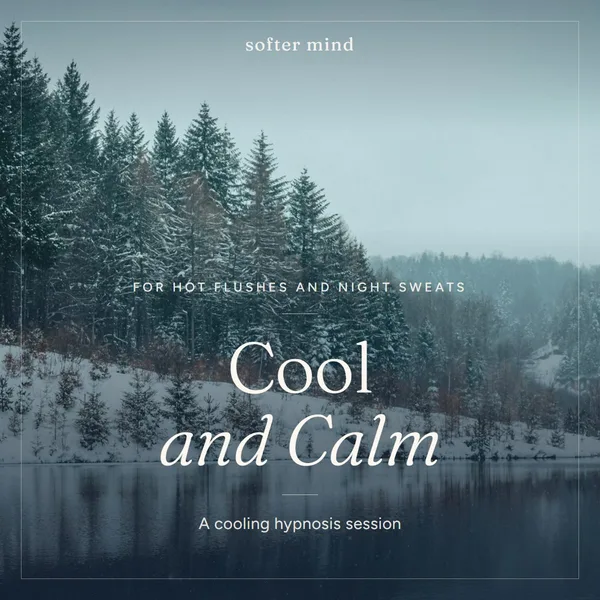
Our recording Cool and Calm uses deep relaxation and vivid cooling imagery, with a simple cue you can practise: a slow breath out and the word "cool". It's a relaxation recording, not a medical treatment, and it doesn't replace advice from your GP.
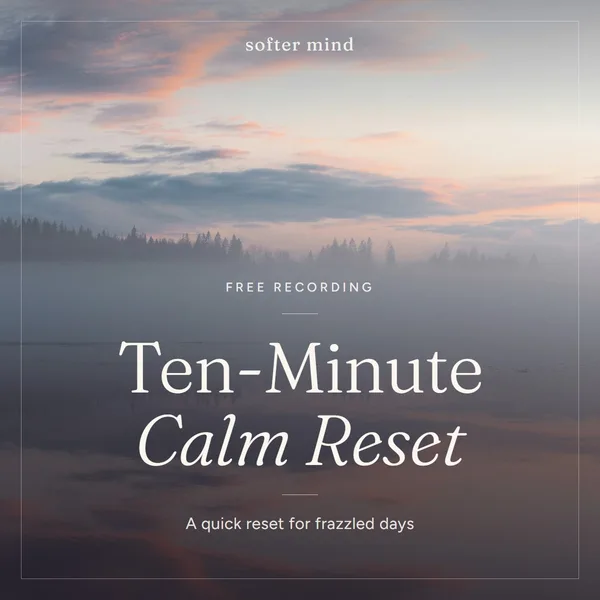
If you'd like to try our style first, our free Ten-Minute Calm Reset is a good place to start.
This article is general information, not medical advice. If you're worried about any symptom, please talk to your GP or pharmacist.